Kyiv, September 3–4, 2026 — External Affairs Minister S Jaishankar wrapped up a landmark trip to Ukraine’s capital this week, becoming the first Indian foreign minister to make a dedicated, standalone bilateral visit to the country since the war with Russia began. The one-day visit put India’s balancing act between Moscow and Kyiv on full display, just weeks after Jaishankar had travelled to Moscow to meet President Vladimir Putin.
Face Time With Zelenskyy
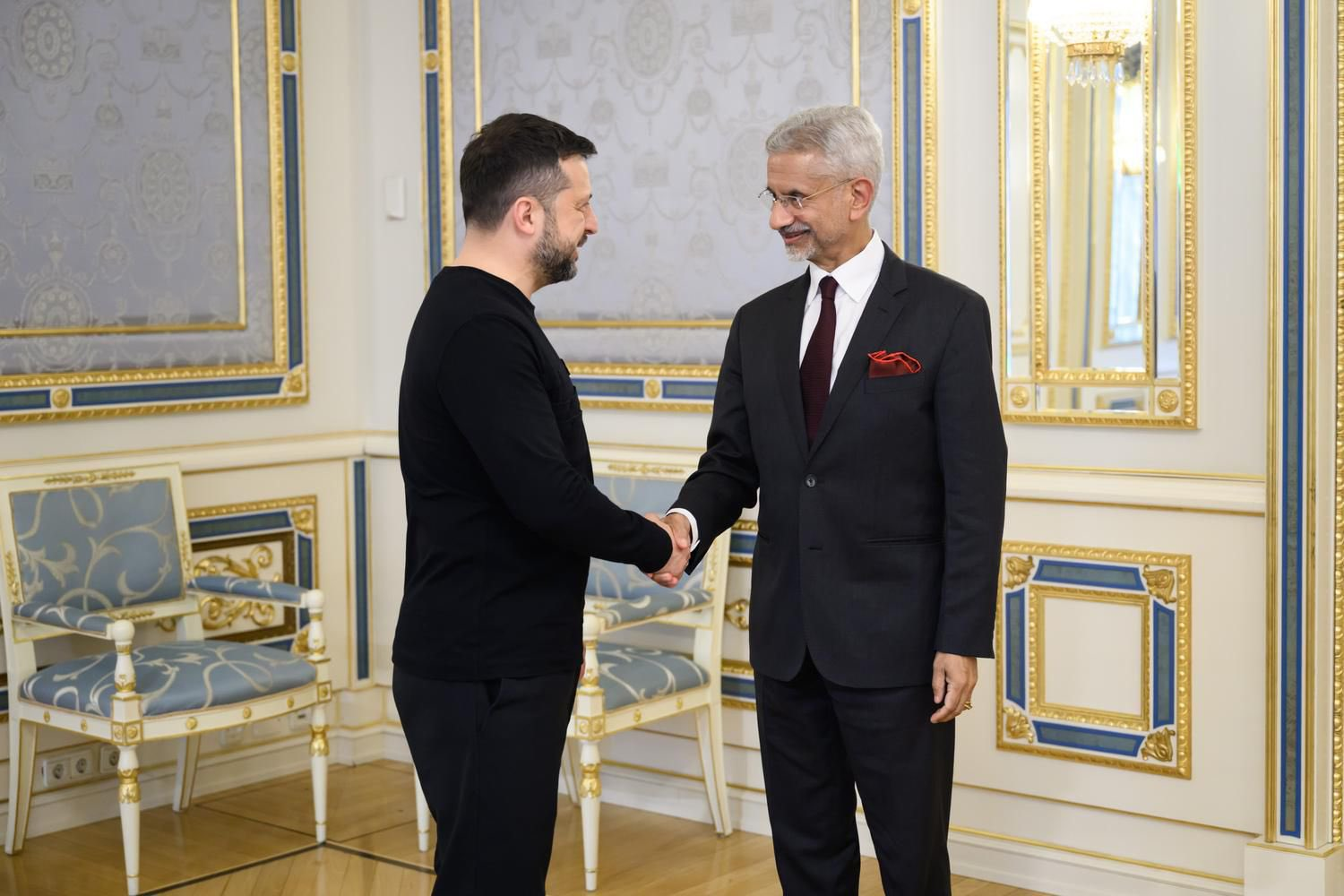
The centrepiece of the trip was Jaishankar’s meeting with Ukrainian President Volodymyr Zelenskyy, where he briefed the President on his earlier talks with Ukrainian Foreign Minister Andrii Sybiha and described the conversation as focused on ways to bring the ongoing conflict to an end.
Zelenskyy, for his part, used the meeting to publicly thank India for what he called its commitment to ending “this unjust war.” He was careful to note, though, that the war’s toll goes beyond the battlefield — flagging continued threats to civilian shipping and disruptions to food supplies as issues that still needed international attention, particularly around the Black Sea.
Discussions between the two sides weren’t limited to the war itself. Jaishankar and his counterparts also touched on expanding cooperation in areas like education, healthcare, agriculture, and digital innovation — a signal that New Delhi wants the relationship with Kyiv to grow well beyond crisis diplomacy.
“Not an Era of War”
Jaishankar leaned on a now-familiar Indian talking point during his press interaction with Sybiha, reiterating that solutions to the conflict won’t be found on the battlefield and that dialogue remains the only realistic path forward. He went further, telling reporters that India was prepared to help “in any manner” if it could contribute to peace efforts — language that echoes Prime Minister Narendra Modi’s own recent comments to Putin on the sidelines of the Shanghai Cooperation Organisation summit, where Modi also called for an end to the fighting.
The timing of the visit is hard to miss. It comes barely a fortnight after Jaishankar called on Putin in Moscow, underscoring India’s continued strategy of staying engaged with both sides rather than picking one.
Defending the Oil Trade
Unsurprisingly, questions about India’s continued purchase of Russian crude came up in Kyiv, especially with Washington’s tariff pressure on New Delhi over the issue still simmering. Jaishankar pushed back on the idea that India’s energy choices deserve special scrutiny, pointing out that meeting the energy needs of a country of 1.4 billion people is not a simple matter and asking that Ukraine’s perspective on the war be met with the same respect India expects for its own position.
It’s a defence Jaishankar has used before. On his Moscow trip weeks earlier, he had already noted that India isn’t even the largest buyer of Russian oil — a title he says belongs to China — and argued that Washington’s tariff logic singles out India unfairly while ignoring larger buyers elsewhere.
Why This Trip Matters
For India, the optics of a standalone ministerial visit to Kyiv — as opposed to fitting it in around a multilateral summit — carry real diplomatic weight. It suggests New Delhi is willing to be seen engaging directly with Ukraine on its own terms, even as it maintains its long-standing energy and defence relationship with Russia.
Whether the visit moves the needle on actual peace talks remains to be seen. But at a minimum, it reinforces India’s positioning as a country willing to talk to everyone involved — Moscow, Kyiv, and Washington — without fully aligning with any one side.
This report draws on statements from External Affairs Minister S Jaishankar, President Volodymyr Zelenskyy, and multiple news agencies covering the September 3–4, 2026 visit to Kyiv.