
September 7, 2026
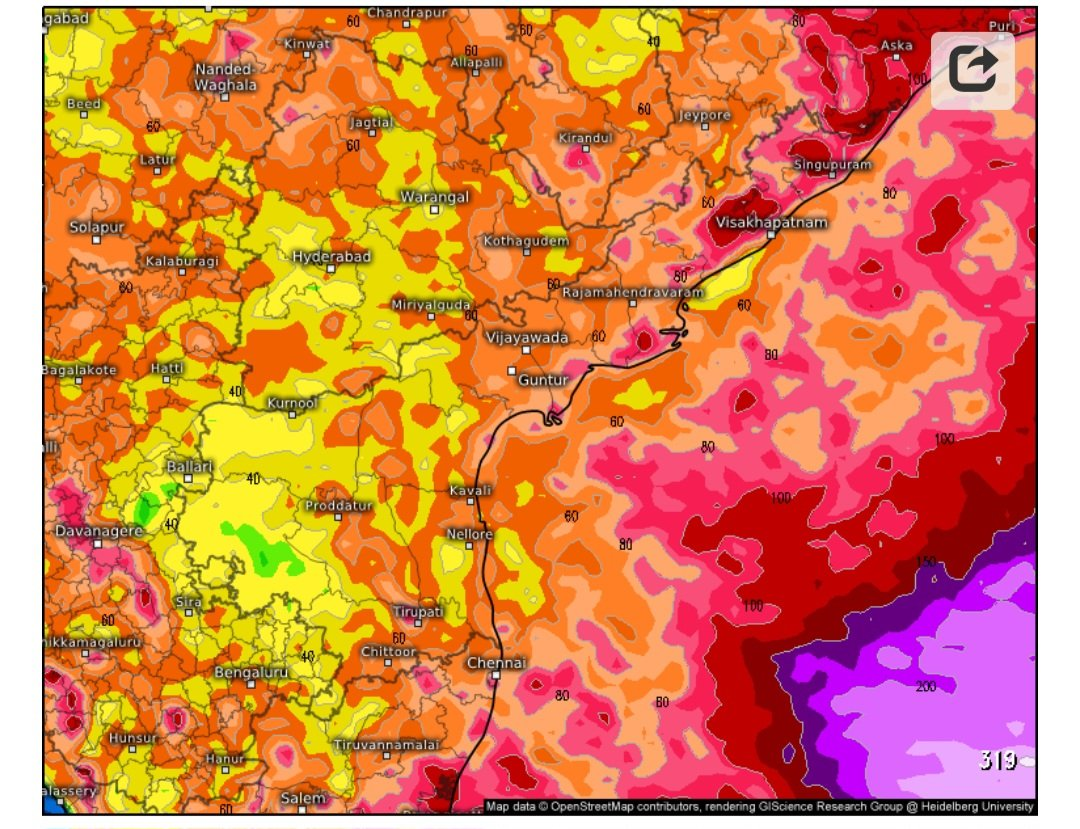
Andhra Pradesh is facing a serious rainfall deficit this monsoon, with several districts in Rayalaseema and South Coastal Andhra experiencing significant moisture stress. The latest government data shows that the state received 203.9 mm of rainfall against a normal 452.9 mm between June 1 and September 6, resulting in a 55% cumulative rainfall deficit.
Rayalaseema among the worst affected
The rainfall shortage is particularly severe across several Rayalaseema districts.
According to the Andhra Pradesh Directorate of Economics and Statistics, Annamayya has recorded a 77.5% rainfall deficit, followed by Chittoor at 64.2%, Sri Sathyasai at 60.9%, YSR Kadapa at 56.4% and Nandyal at 53.9%.
Kurnool has recorded a 46.1% deficit, while Tirupati stands at 39.2%. The figures underline the uneven distribution of rainfall across the region.
Dry weather adds to the pressure
The rainfall shortage is being accompanied by persistent dry conditions in parts of Andhra Pradesh. While reports have described the weather as hot and humid in September, it is important to distinguish between hot and dry conditions and an officially declared heatwave.
At present, a blanket description of the entire region as being under an “intense heatwave” would be too broad unless supported by a specific India Meteorological Department heatwave warning.
The more clearly established concern is the combination of rainfall deficiency, dry spells and reduced soil moisture.
IMD warns of subdued rainfall activity
The India Meteorological Department has indicated that subdued rainfall activity is likely to continue over Peninsular India in the near term. Its early-September outlook also points to continued monitoring of rainfall activity across the region.
That outlook is important for Andhra Pradesh because another prolonged dry spell could further increase pressure on rain-fed agriculture and available water resources.
Farmers face growing challenges
The rainfall deficit is already affecting the pace and pattern of agricultural activity.
Earlier in the season, Andhra Pradesh recorded a significant rainfall shortfall, and farmers in several districts delayed sowing while waiting for better rainfall. Reports also highlighted particularly low sowing progress in districts including Prakasam, Anakapalle, Polavaram, Markapuram and Annamayya.
For farmers, the issue goes beyond rainfall totals. Timely rain is essential for maintaining soil moisture during crop growth, particularly for rain-fed agriculture. If dry conditions persist, farmers may face higher irrigation costs, crop stress and potential yield losses.
Is El Niño the only reason?
No.
El Niño is an important climate factor that can influence global atmospheric circulation and monsoon behaviour, and recent reports have linked strengthening El Niño conditions with India’s rainfall concerns. Reuters has reported that below-normal September rainfall, combined with strengthening El Niño conditions, is increasing concerns over crops and soil moisture.
However, it would be scientifically inaccurate to say that El Niño alone caused Andhra Pradesh’s 55% rainfall deficit. Rainfall over India is influenced by multiple atmospheric and oceanic factors, including monsoon circulation, weather systems and regional variability.
For responsible news reporting, the situation is better described as a severe rainfall deficit occurring amid unfavourable climate and monsoon conditions.
Water resources remain a concern
A prolonged rainfall deficit can also put additional pressure on reservoirs, groundwater and drinking-water supplies, particularly in drought-prone areas.
The concern becomes more significant if rainfall does not recover because September rainfall is important not only for existing crops but also for maintaining soil moisture and supporting subsequent agricultural activity. Reuters has highlighted the importance of September rainfall for crop development and upcoming agricultural planning.
What happens next?
The coming weeks will be crucial for Andhra Pradesh.
A few significant rainfall spells could provide relief to farmers and improve soil moisture, but isolated showers alone may not be enough to erase such a large cumulative deficit.
For now, officials, farmers and residents will be watching four key indicators:
- District-wise rainfall
- Reservoir and groundwater levels
- Crop and soil-moisture conditions
- IMD weather warnings and rainfall forecasts
Andhra Pradesh is facing a significant monsoon rainfall deficit, with the latest government data putting the statewide shortfall at 55% as of September 6. Rayalaseema districts such as Annamayya, Chittoor, Sri Sathyasai, YSR Kadapa and Nandyal are among the worst affected.
The immediate challenge is not simply the heat. It is the combination of deficient rainfall, prolonged dry spells and increasing agricultural and water stress.
Whether the situation improves will largely depend on how much rain Andhra Pradesh receives in the remaining monsoon period.